

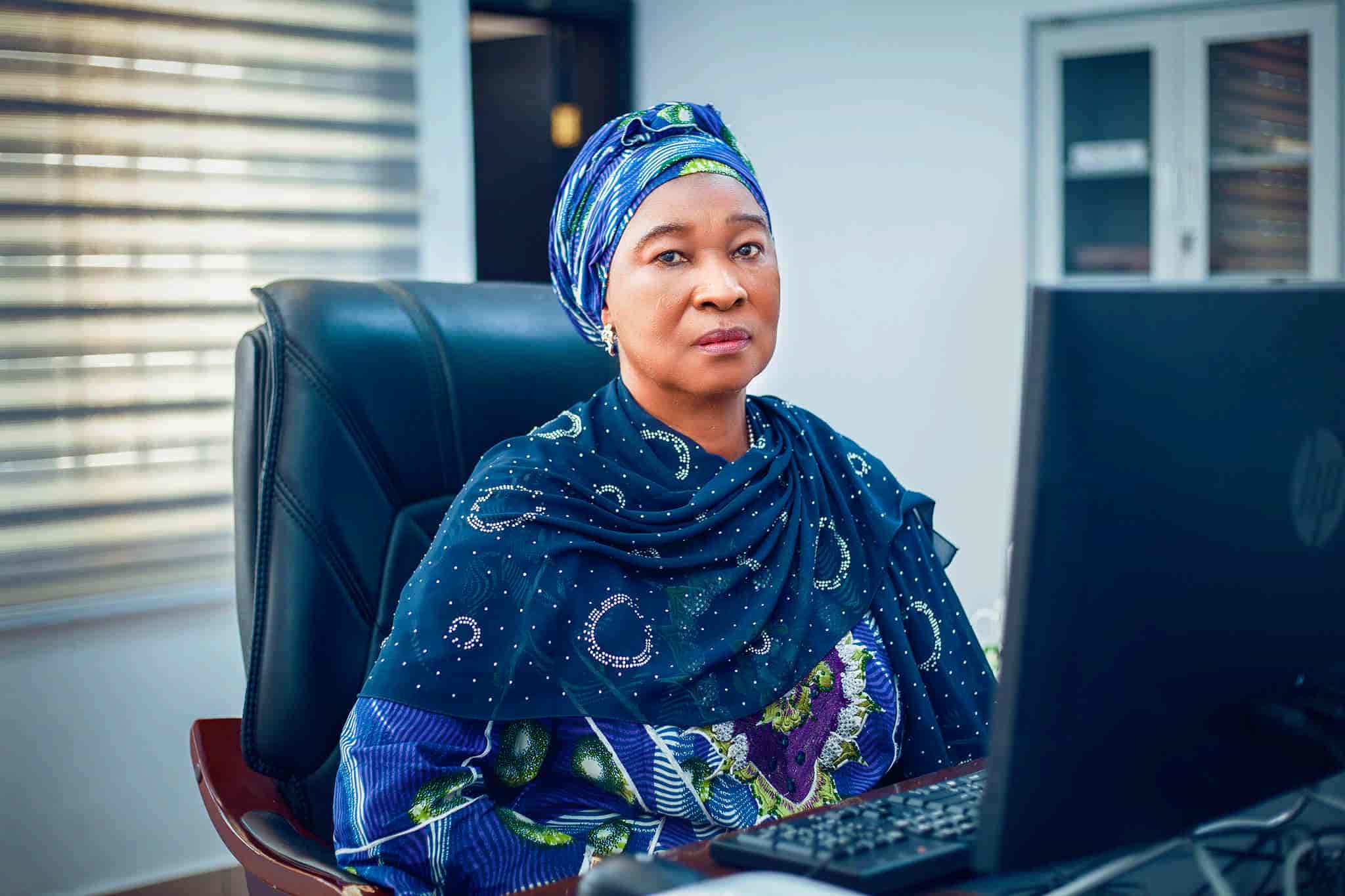
Welcome to the Department of Economics and Development Studies at El-Amin University! We are committed to developing critical thinkers and problem solvers equipped to tackle economic and developmental challenges. Our program blends rigorous academics with practical experience, empowering students to make a real difference in Nigeria’s economic future. Explore our courses and begin your journey toward a career that impacts lives and drives sustainable growth.
To carry out cutting edge research in addressing the contemporary development problems related to social, political, economic, and environmental issues.
To produce a new generation of leaders who will be highly skilled in their chosen areas of specialization.
The Department of Economics and Development Studies at El-Amin University offers a comprehensive program focused on understanding and addressing economic and developmental challenges within Nigeria and beyond. Our curriculum covers core areas such as microeconomics, macroeconomics, development policy, and quantitative methods, with an emphasis on applying these principles to Nigeria’s unique socio-economic landscape. Through interactive lectures, case studies, and policy analysis, students learn to think critically about economic growth, poverty alleviation, and sustainable development.
Practical experience is a cornerstone of our program. Students engage in field research, internships, and collaborative projects with government agencies, NGOs, and private-sector partners, gaining insights into the real-world impact of economic policies. Our graduates are equipped with both the theoretical knowledge and practical skills necessary to pursue meaningful careers in public policy, research, international development, and economic consultancy, contributing to Nigeria’s progress and global development efforts.
Economics is a vital subject that extends beyond its realm, intertwining with various social science and management disciplines like Accounting, Business Administration, Finance, Political Science, and Sociology. This interdisciplinary approach enriches students’ knowledge and skills, preparing them to excel in diverse fields and be globally competitive.
The program focuses on three core areas: Economic Theories, Mathematics/Econometrics, and Economic Policies, which are essential for developing well-rounded graduates capable of effective performance in their roles.
The course content ensures that students are well-grounded in these areas, fostering their abilities to think critically and excel as economists.
The program aims to equip graduates with critical skills such as abstract thinking, analytical reasoning, data analysis, and effective communication to address complex economic issues. The objectives include providing a sound foundation in economic principles, stimulating intellectual growth, developing analytical tools for problem-solving, and instilling a critical understanding of economic policies.
Graduates of this program will possess skills to create jobs, manage resources effectively, offer valuable advice to management, engage in training and consultancy services, and interpret and advise on government economic policies.
The program emphasizes skills like scientific literacy, research proficiency, innovation, economic literacy, critical thinking, global awareness, and effective oral and written communication to prepare students for the dynamic economic landscape. The program stands out for its global perspective, teaching economic structures’ diversity and application in different economies, with a focus on developing and emerging economies. Emphasis is placed on discussing and analyzing global economic issues within the context of evolving economic trends, preparing students for real-world challenges.
| Programme | UTME | Direct Entry | Remarks |
|---|---|---|---|
|
B.A Arabic |
Five credits at SSCE (or its equivalent) in Arabic, Islamic studies, Hausa, and two other Arts/Social Science subjects. |
Two ‘A’ level credit passes in relevant subjects one of which should be Arabic in NCE or ND with at least a merit level. |
UTME subjects are: Arabic, Islamic Studies, Hausa, and English subjects. |
|
B.A. Islamic Studies |
Five credit passes at SSCE (or its equivalent) in Arabic, Islamic studies, Hausa, and two other Arts/Social Science subjects. |
(a)Two ‘A’ level passes in relevant subjects. One of the advanced level subjects should be Islamic Studies. NCE or ND at merit level. |
subjects are: Arabic, Islamic Studies, Hausa, and English subjects. |